Skip Spring Break: Why Your Baby Doesn't Care About Peak Season (and Your Wallet Shouldn't Either)

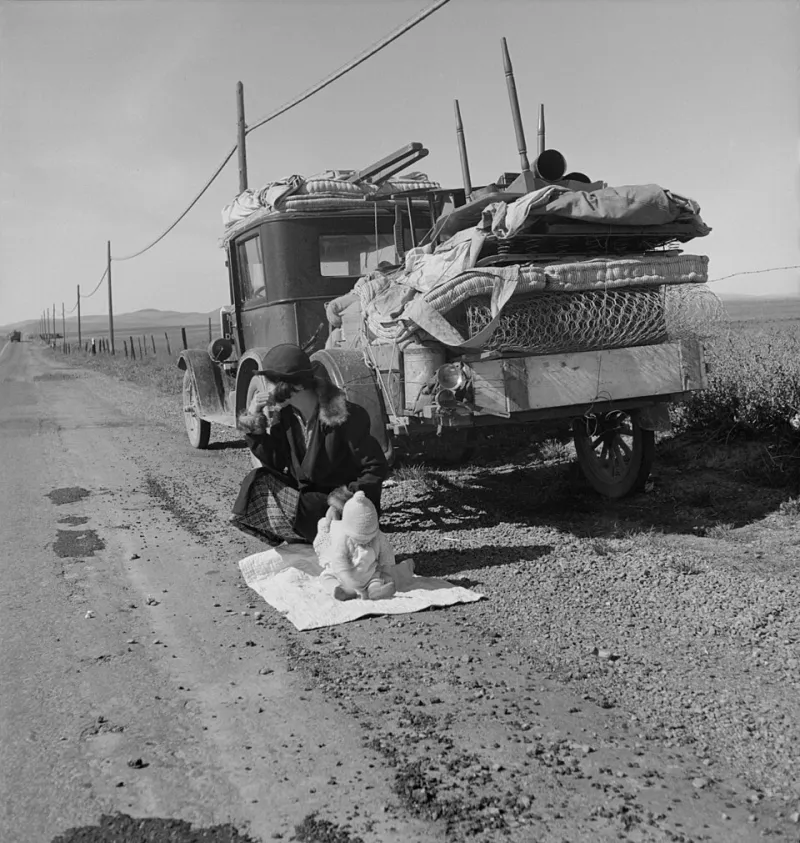
Photo: Mark Fischer, CC BY-SA 2.0, via Wikimedia Commons
Here's an opinion I'll defend anywhere: traveling with a baby during spring break is a self-inflicted wound.
I get the instinct. The weather is warming up, work piles up, and the school calendar has trained an entire generation of parents to treat March and April as The Time To Travel. But if your kid is under two, you're not on the school calendar. You're free — and you're squandering that freedom if you book the same week as three thousand college students and every family with a fourth grader.
The Case for Going When Nobody Else Is
Babies don't care about peak season. They don't need the beach at its warmest, the town at its liveliest, or the pool at its most crowded. What they need is a predictable routine, a quiet room, and parents who aren't white-knuckling through a packed airport. Shoulder season delivers all three, at a discount.
The rates alone are worth it. Family destinations price-gouge during school breaks because they can. The same Gulf Coast condo that runs $450 a night in mid-March might be $220 in early May. The same Orlando-area hotel drops 30–40% once spring break crowds clear out. Over a week, that's a plane ticket's worth of savings — or, more realistically, a few nice dinners you didn't have to eat in a two-hour wait line.
The service gets dramatically better. This is the part nobody mentions. When a hotel is at 95% occupancy with a spring break crowd, staff are in triage mode. Housekeeping runs late, the front desk is a mob scene, and nobody has time for your questions about the crib you requested. Visit the same property in early May or late September and suddenly the staff remember your name, the high chair appears without asking, and the general manager chats with you at breakfast. Babies are extremely good at extracting goodwill from hotel staff — but only if there's goodwill available.
The pool is actually usable. Spring break turns most hotel pools into a splash-zone mosh pit by 10 a.m. That's not a place to take an infant. In the off-weeks, you can have the pool to yourselves at 9 a.m., do your thing, and be back for the first nap before the crowds wake up. Empty pools are one of parenting's genuinely underrated luxuries.
Timing Is a Strategy, Not an Accident
The sweet spots for baby travel in the US are well established: late April through May (after spring break, before summer rates), early September through mid-October (after Labor Day, before the holidays), and the first two weeks of December (pre-holiday lull, magical at holiday-decorated properties).
Weather is the obvious trade-off — shoulder season is called that for a reason. But with a baby, 'slightly cooler' is usually a feature, not a bug. You're not trying to maximize beach hours anyway; you're trying to protect naps and keep a small human regulated. Mild, quiet, and cheap beats hot, loud, and expensive for this crew almost every time.
The Working Parent Angle
If you're juggling a job, off-peak travel gets even better. Flights during non-holiday weeks are cheaper and less likely to be delayed, and your PTO stretches further when you're not competing with the whole office for spring break week. Better yet: stack a long weekend onto a work trip. Tack Friday and Monday onto a Tuesday–Thursday conference in a family-friendly city, fly your partner and the baby in, and you've built a four-day trip for the price of two hotel nights out of pocket.
A Few Ground Rules
- Check local school calendars for your destination. 'Shoulder season' in Orlando may still be peak in Washington D.C. and vice versa. A quick look at the district calendar for wherever you're going tells you when the kids show up.
- Book refundable. Babies add variables. Off-peak rates are good; flexible off-peak rates are better.
- Confirm amenities run year-round. Some resort pools, kids' programming, and restaurants scale back in the off-season. Ask specifically what's open during your dates.
- Embrace the quiet. The whole point is that fewer people equals easier travel. Lean into the slow mornings and the empty elevators.
Break Up With the School Calendar
The school-break schedule will find you soon enough — around kindergarten, give or take. Until then, you hold one of parenting's rarest advantages: total freedom over when you travel, held by people whose travel needs are actually simplest when things are calm.
Use it. Go in May. Go in late September. Take the discounted suite, the attentive staff, and the pool at 9 a.m. with nobody in it. Spring break will still be there when your kid is ten — and by then, you'll have had years of practice traveling well without it.