Room to Sleep: What Hotel Room Design Actually Does to Your Baby's Rest (And How to Spot the Red Flags Before You Book)

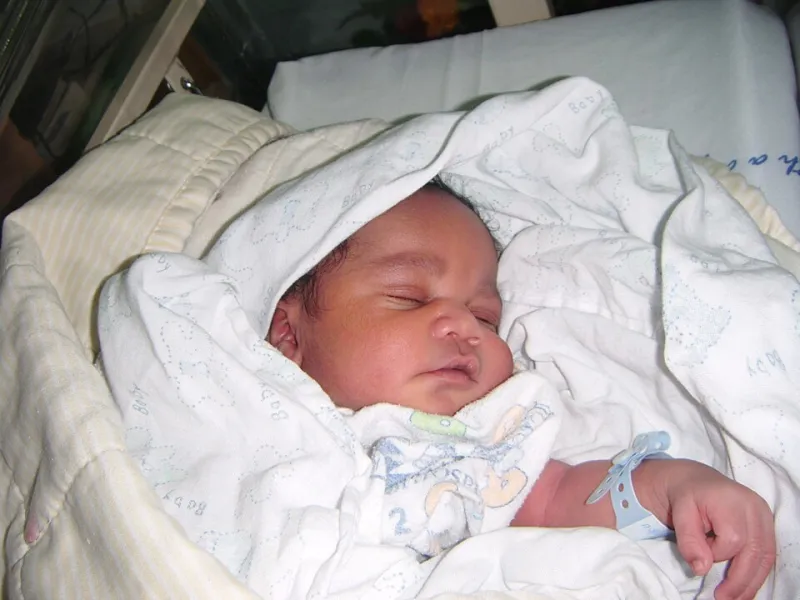
Photo: Nikhil More, CC BY-SA 4.0, via Wikimedia Commons
You've done your homework. You found a hotel with cribs available, a pool for the kids, and a location that works for everyone. You read the reviews. You booked it.
And then you show up and the room is a long, narrow rectangle with one window facing a highway, a thermostat that seems to do whatever it wants, and curtains that let in every bit of the parking garage's fluorescent glow at 2am.
Welcome to the overlooked variable in baby travel planning: the room itself.
Most family travel guides focus on amenities—cribs, high chairs, kid menus. Those things matter. But the physical design and layout of a hotel room has an enormous impact on whether your baby sleeps and, by extension, whether you sleep. And it's almost never covered in the listing.
Here's how to evaluate a hotel room for actual infant sleep success—before you book, and before you show up exhausted at the front desk.
Why Hotel Rooms Are Basically Designed Against Baby Sleep
Hotel rooms are engineered for adult guests who stay up late, sleep in, and don't have a 6am wake window. The design priorities are aesthetics, square footage efficiency, and easy housekeeping—not blackout conditions or acoustic insulation or consistent temperatures for light sleepers.
For babies (and toddlers), these priorities are basically the opposite of what you need. Infants are sensitive to light cues that affect melatonin production. They wake easily at unfamiliar sounds. They can struggle to regulate body temperature in rooms that fluctuate overnight. And they need a crib placement that isn't directly under an AC vent or wedged into the only available corner next to the minibar.
None of this is the hotel's fault, exactly. But it is something you can anticipate and plan around—if you know what to look for.
The Lighting Problem (And How to Evaluate It Remotely)
Light is probably the single biggest hotel room issue for families with babies. Here's why: most hotel curtains are designed to look good and provide some privacy, not to create genuine sleep-conducive darkness. The difference between curtains that block 70% of light and curtains that block 95% of light is enormous when you're trying to get a baby down for a 7pm bedtime in July.
What to look for in room photos: Check whether the curtains appear to have a full-blackout lining (they'll look thicker and more substantial), and notice whether there's a gap between the curtain panels or along the edges. Many hotel photos are taken during the day with curtains open—if you can see the window treatment at all, zoom in.
What to ask the hotel: "Do the curtains in that room type fully block daylight?" and "Is there a gap between the curtain panels when they're closed?" A good front desk agent will either know or will go check. If they can't answer, that's useful information too.
Red flag: Rooms described as having "sheer curtains" or "floor-to-ceiling windows with city views" are almost never good for baby sleep without supplemental blackout measures. Pack a portable blackout blind (there are travel-sized versions that use suction cups) as insurance regardless.
Also worth noting: hallway light. If there's a gap under the door, even a thin one, it can create enough ambient light to disrupt a sleeping infant. Ask whether the room has a solid door seal, or plan to use a rolled-up towel.
Noise Insulation: The Variable No One Talks About
Hotel noise is complicated because it comes from so many directions—hallways, adjacent rooms, elevator shafts, street traffic, ice machines, and HVAC systems that cycle on with a clunk at 3am. For adults, most of this is ignorable. For babies who are already in an unfamiliar sleep environment, it can mean repeated wake-ups and a very long night.
Room location matters more than you think. Rooms near elevators, ice machines, or vending areas are consistently noisier. Rooms at the end of a hallway, away from these features, tend to be quieter. When you call to confirm your reservation, ask specifically to be placed in a room away from the elevator and ice machine—most hotels will accommodate this without issue.
Floor selection: Higher floors aren't always quieter. They avoid street noise but are often closer to rooftop mechanical equipment. Mid-level floors (3rd–6th in a mid-rise hotel) often hit a sweet spot. Ground floor rooms can be convenient for stroller access but tend to be noisier.
Ask about wall construction: This is a more advanced question, but some hotels—particularly newer builds or boutique properties—use better acoustic insulation between rooms. If you're staying somewhere that reviews frequently mention thin walls, that's a meaningful data point.
The white noise workaround: A portable white noise machine or a white noise app is genuinely one of the most effective tools in the family travel kit. It masks inconsistent sounds and creates a familiar audio cue for sleep. Pack one. Always.
Room Layout and Crib Placement: The Details That Change Everything
Where the crib actually goes in the room affects both your baby's sleep and yours. In a standard hotel room, options are often limited—but they're not zero.
Look for alcoves and entryways. Many hotel rooms have a small entryway or alcove near the bathroom that's separate from the main sleeping area. A crib placed there gives you a bit of physical and acoustic separation, which helps on both ends—baby sleeps without being disturbed by your TV, and you can have the lights on without waking them.
Suite configurations are worth the upgrade. A room with a separate sleeping area—even just a partial dividing wall—can transform the travel experience with an infant. You get a functional evening after bedtime. This is one of the few hotel upgrades that's genuinely worth the extra cost when you're traveling with a baby.
Red flag in room photos: A room where the only available floor space is immediately adjacent to the bed, with no obvious alcove or corner, usually means the crib will end up right next to where you sleep. That's not ideal for anyone.
Ask about crib placement specifically: "If we request a crib, where does it typically go in that room type?" is a completely reasonable question. Hotels that field this question regularly will have a clear answer.
Temperature Stability: The Quiet Disruptor
Babies sleep best in rooms that stay consistently between 68–72°F. Many hotel rooms run warmer than guests realize—especially rooms with large windows that get afternoon sun—and HVAC systems that cycle on and off can create temperature swings that disrupt light sleep.
Look for rooms with individual thermostat control (not a shared system that's managed by the building). Most mid-range and above hotels have this, but it's worth confirming.
Ask whether the AC runs continuously or cycles. Continuous-running systems maintain a steadier temperature and also provide consistent white noise. Systems that cycle on and off—especially with a loud startup—are harder to sleep through.
South-facing rooms with large windows tend to overheat in summer. If you're traveling in warm months, ask about room orientation or request a north- or east-facing room.
The Quick Pre-Booking Checklist
Before you confirm any hotel reservation, run through these:
- Do the curtains fully block daylight?
- Is the room away from the elevator, ice machine, and street noise?
- Is there a crib-friendly alcove or suite layout available?
- Does the room have individual thermostat control?
- Does the HVAC run continuously or cycle on and off?
Five questions. Five minutes on the phone with the front desk. And a dramatically better chance that your family actually sleeps on vacation.
The room itself is doing more work than you think. Might as well make it work for you.